
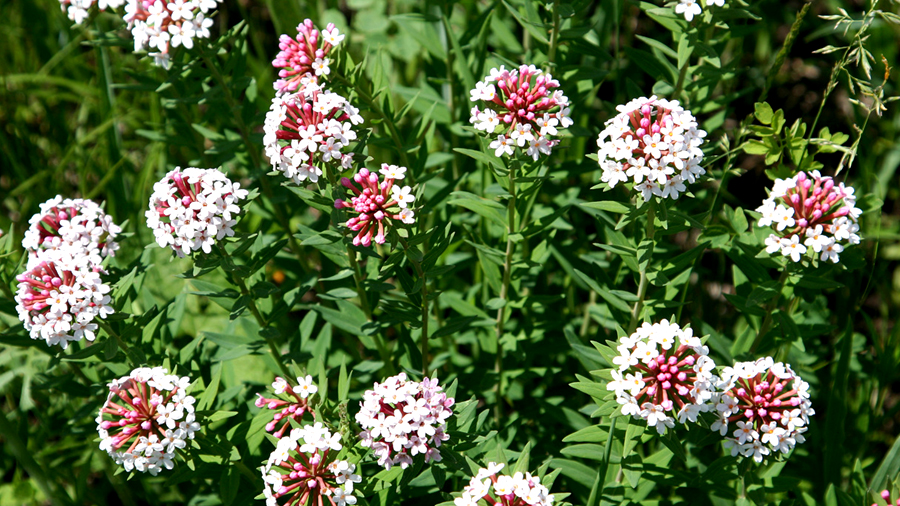
This paper is made from a poisonous plant. That's the point.
On the Tibetan Plateau, papermakers turn the root of a toxic plant into paper.
The plant is Stellera chamaejasme, known in Chinese as ruixiang langdu. It grows in high grasslands and contains compounds that deter insects. For papermakers, that is useful. Paper made with the root has long been valued for resisting insects and lasting in the dry plateau climate.
The plant is dangerous enough that makers have to handle the raw material carefully. The finished sheet has been used for manuscripts, printing and artwork for centuries.
That contrast is what makes the paper worth looking at.
How papermaking reached Tibet
Chinese official heritage records trace the arrival of papermaking in Tibet to the Tang dynasty. The Old Book of Tang records that the Tibetan ruler requested craftsmen skilled in making paper and ink from the Tang court in 649.
The historical record does not name the person who first chose Stellera root for paper. It is safer to think of Tibetan paper as a long process of adaptation. Papermakers learned techniques from neighboring regions, then worked with plants that were available on the plateau.
Stellera was one of several materials they used. Traditional Tibetan papers have also been made from other local shrubs and trees, with different fibers producing different grades of paper.
In Nimu County near Lhasa, the best-known local paper is made mainly from Stellera root. Chinese heritage records describe Nimu paper as suitable for preserving documents because it is flexible and resistant to insects, damp and decay.
What the work involves
The exact method varies by place, but the basic work is easy to recognize.
Makers gather the roots, wash them and remove the outer layer. They soften the pale inner material, separate the fibers and beat them into pulp. The pulp is mixed with water and poured across a cloth-covered frame. Once the fibers settle, the sheet dries in the plateau sun before being removed and polished.
None of this is quick. The maker has to judge the fibers by hand: whether they have softened enough, whether the pulp is even and whether the wet sheet is ready to lift.
The finished paper is usually warm in color rather than bright white. Its fibers remain visible, and the surface feels less uniform than factory paper.
I make paper lamps, so this is the part I notice first. An uneven sheet changes the light. The fiber pattern stays visible after the lamp is switched on, which gives the material a presence that smooth paper does not have.
The family keeping Nimu paper alive
Xuela Village in Nimu County is one of the few places where the traditional process has continued.
Tsering Dorje (次仁多杰), born in 1950, is listed as a national representative inheritor of Tibetan papermaking. His son, Kelsang Tenzin (格桑旦增), grew up around the work and later joined the family workshop.
Their story is less tidy than the usual tale of a child happily inheriting an old craft. Kelsang Tenzin has said that papermaking felt repetitive when he was young and brought in little money. Carpentry seemed like the more practical choice.
Demand from archives and monasteries helped restart production in Xuela Village during the 1990s. The family returned to making paper, and the workshop gradually began producing notebooks, bookmarks and other small objects alongside traditional sheets.
That shift matters. A craft cannot survive on recognition alone. Someone still has to buy the paper.
The raw material is also a problem
Stellera grows slowly, and papermakers use its root. Digging up too much of it can damage the local supply.
Local reports say a harvested plant may need five to ten years to grow back. To reduce pressure on wild plants, Tsering Dorje and local authorities have experimented with cultivating Stellera rather than relying only on roots gathered from the grasslands.
This is the awkward part of protecting a traditional craft. More interest can bring money to the village, but it can also increase demand for a slow-growing wild plant.
The answer cannot be to make as much paper as possible. The material itself sets a limit.
A paper does not need to be indestructible
Tibetan papermaking was included in China's first national list of intangible cultural heritage in 2006. Today, makers use Tibetan paper for religious texts, calligraphy, painting and small cultural products.
Some claims about the paper have grown larger with every retelling. It is often described as waterproof, impossible to tear or able to last forever. Handmade paper does not need those promises.
What we can say is already interesting. Tibetan papermakers found useful fiber in a toxic local plant. The same chemical defenses that make Stellera unappealing to insects help protect the paper. Makers learned to turn a difficult root into sheets that could carry writing and survive long storage in the plateau climate.
If you want to see the real material, search for Xuela Tibetan paper or Nimu Tibetan paper. Look closely at the color and the fibers. Do not expect a perfectly white, perfectly even sheet.
The irregularity is part of how it was made.
Sources checked
- China Intangible Cultural Heritage: Tibetan papermaking
https://www.ihchina.cn/project_details/19628.html
- Tibet Autonomous Region Department of Culture and Tourism: Nimu Tibetan paper
https://wlt.xizang.gov.cn/xwzx_69/jdxw/201811/t20181116_119864.html
- Lhasa Municipal Party Committee: Xuela Tibetan paper and raw-material protection
https://lasa.xzdw.gov.cn/zt2_1927/04/202309/t20230927_400667.html
- The Palace Museum: discussion of the Old Book of Tang record on paper and ink craftsmen
https://www.dpm.org.cn/Uploads/File/2023/03/21/u64191238c791f.pdf